Electricity has become one of the most important infrastructure questions of the AI era.
For the past two years, much of the public narrative around AI infrastructure has focused on GPUs, model scale, cloud capacity, and data center construction. Those are critical pieces of the AI ecosystem. But as AI moves from experimentation to large-scale deployment, another layer is becoming just as important: power.
The United States has benefited for more than a century from one of the most reliable and productive electric systems in the world. It has powered industrial growth, the digital economy, modern healthcare, advanced manufacturing, and everyday life. Most of the time, it works so seamlessly that we do not think about it.
The electrical infrastructure ecosystem must support a new era of growth.
AI data centers, industrial reshoring, electric vehicles, building electrification, and advanced manufacturing are all increasing the need for electricity. Data centers are the most visible part of this shift, but not the only driver. They are better understood as an early signal of a broader transition: electricity is becoming central to economic and global competitiveness.
The International Energy Agency sees a similar pattern globally. It projects that electricity demand from data centers could more than double by 2030, reaching roughly 945 terawatt-hours, with data center being the primary driver. [1]
The scale of this shift is becoming clearer [2]. Looking ahead, the growth of AI training and inference workloads will translate into staggering compute demands, making data centers one of the largest energy consumers in the modern world.
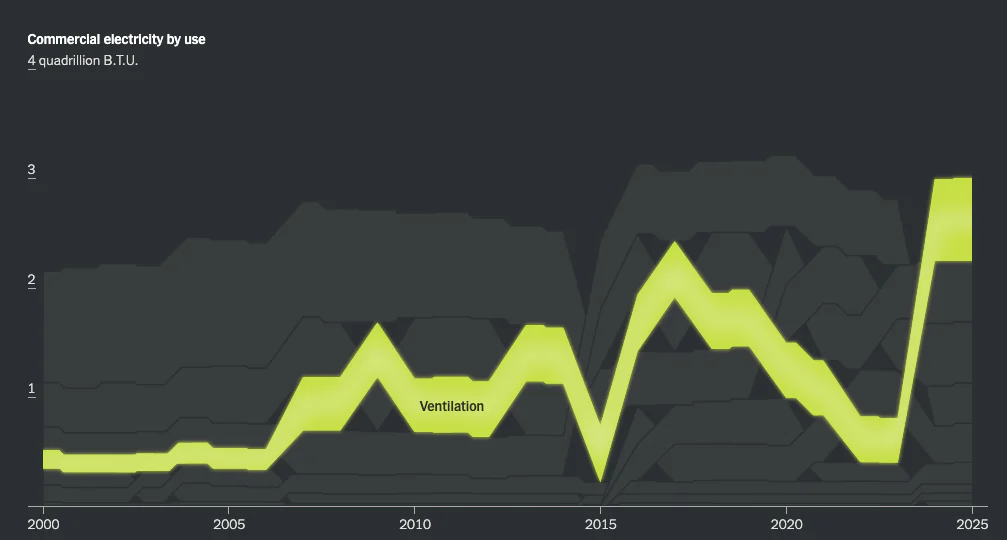
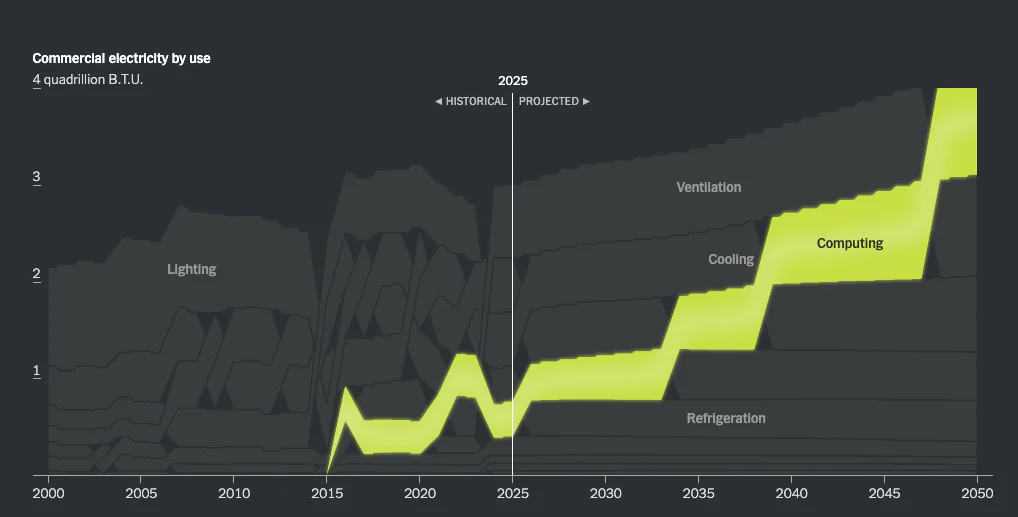
The IEA also notes that the United States accounts for the largest share of the projected increase, followed by China. [3] A 200–300 MW AI facility can approach the instantaneous power demand of a metropolitan area serving roughly one million residents.
This creates both pressure and opportunity.
The pressure is obvious. Large data centers require significant power, often in concentrated locations deployed on aggressive timelines. Utilities, regulators, and communities need confidence that these new AI-driven loads can be connected without compromising affordability and reliability. For data center operators, power is no longer just an operating expense hidden inside the facilities budget. It is a critical gating constraint.
But the opportunity is equally important.
Meeting demand through power intelligence
The AI infrastructure buildout can bring capital, urgency, and innovation into the power system. If designed thoughtfully, large data centers can help accelerate investment in generation, transmission, storage, power electronics, cooling, and grid-aware energy management.
McKinsey has framed the business implication clearly: the growth of data centers and the adoption of AI increasingly depend on the supply and stability of electric power, creating new investment requirements across power infrastructure, energy management, and adjacent sectors. [4]
The next generation of data centers will need to be more than power consumers. They will need to become power-aware infrastructure: capable of managing demand, supporting grid requirements, responding to utility signals, and operating with a higher degree of electrical intelligence.
That requires a shift in how we think about data center power architecture.
Historically, the data center power model was built around availability. The primary objective was to keep compute running under all conditions. Redundancy, backup generation, UPS systems, and carefully engineered distribution were designed to protect uptime. This remains essential.
But the next era will require another layer: grid interaction.
AI workloads are different from traditional enterprise computing workloads. AI workloads create large and dynamic power profiles during training environments due to GPU cluster ramping. These fluctuations matter. At small scale, they are a facilities issue. At large scale, they become a grid planning issue.
This is where the opportunity for innovation becomes real.
Battery systems, power electronics, advanced controls, workload-aware energy management, and local energy orchestration will transform data centers into intelligent grid participants, rather than passive loads. The next era of data centers will smooth power peaks, ride through voltage events, support low-voltage ride-through requirements, respond to demand response signals, and reduce the stress created by sudden load changes.
In other words, the data center can become part of the solution.
The best operators will increasingly treat power not simply as an input, but as part of the operating architecture. Securing capacity, reducing interconnection risk, managing peak demand, responding to utility requirements, and avoiding unnecessary cost shifts to surrounding communities will become core elements of data center strategy.
Power orchestration drives the AI buildout
The public narrative often treats data centers and the grid as opposing forces. That framing is too narrow. A more productive framing is this: AI is exposing a transition that was already underway.
Handled poorly, this could create friction: slower data center approvals, greater local resistance, rising electricity costs, and fragmented private power systems built around narrow project needs.
Handled well, it could become a catalyst: more investment in resilient power infrastructure, faster deployment of grid-supporting technologies including storage, better coordination between utilities and large loads, and a new generation of electrically intelligent data centers.
AI infrastructure cannot be planned as compute alone. It has to be planned as compute plus power. The winners in this next phase will not simply be the companies with the most GPUs or the largest campuses. They will be the companies that understand how to integrate compute, energy, controls, storage, cooling, and grid requirements into a single operating architecture.
For decades, the power system has been reliable enough to remain invisible. That was a sign of success. But the next era of AI will make electricity visible again. Not because the system has failed, but because it has become strategically important.
AI infrastructure is becoming power infrastructure.
And powering the next era of AI will require more than building bigger data centers. It will require building smarter, more responsive, more grid-aware energy systems around them.
That is where the next wave of infrastructure innovation will happen.
References
- [1]
- International Energy Agency “Executive summary: Energy and AI” www.iea.org (opens in a new tab)
- [2]
- The New York Times “It’s the Age of Electricity and America Isn’t Ready,” by Robinson Meyer
- [3]
- U.S. Energy Information Administration “EIA forecasts strongest four-year growth in U.S. electricity demand since 2000, fueled by data centers” www.eia.gov (opens in a new tab)
- [4]
- McKinsey & Company “How data centers and the energy sector can sate AI’s hunger for power” www.mckinsey.com (opens in a new tab)